In this guide
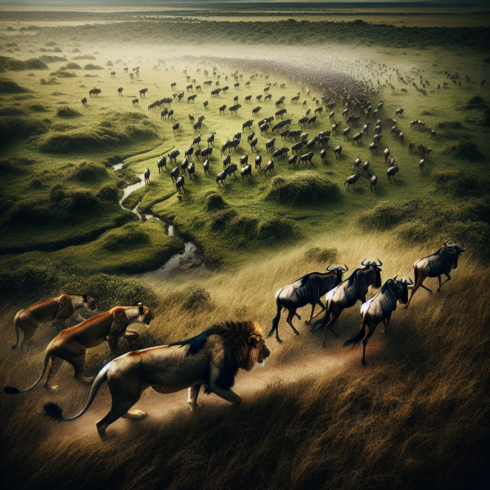
The Masai Mara migration calendar is a planning guide, rather than a timetable. Rain and grazing drive the herds between Tanzania’s Serengeti and Kenya’s Mara, so their location changes between years. A safari can offer time to look for the migration; it cannot guarantee a river crossing.
Use the monthly outline below to choose your travel window, then match your accommodation and game-drive area to conditions nearer departure. Keep the wider safari in mind: a booking tied to one crossing point leaves little flexibility when the herds move.
Understanding the Serengeti–Mara and Mara–Loita Herds
The main Serengeti–Mara migration and the Mara–Loita population are distinct. The Loita Plains are not the first stop in Kenya for herds arriving from the Serengeti. Barriers have restricted the separate Mara–Loita population’s movements, and many of those animals are now resident.
The month headings describe broad seasonal patterns, not fixed locations for every herd. Arrivals in the Mara can occur in June or July; there is no reliable first-arrival date. River crossings are unpredictable, including when animals are already gathered nearby.
January: Calving-Season Planning on the Tanzania Side
For the main migration’s calving season, the relevant landscape is the southern Serengeti ecosystem in Tanzania. January is part of that seasonal window. A Kenya-only Mara itinerary does not place you on those calving grounds.
February: Calving Does Not Mean Mara Calving
February is also associated with Serengeti calving. Choose the country and safari route around that interest; do not book the Mara expecting the southern plains’ calving concentration. Exact animal locations and births cannot be scheduled.
March: Keep the Country and Route in View
Do not treat March as a fixed Mara arrival month. Plan a Mara visit around the area your itinerary actually covers. A Kenya booking does not automatically include a cross-border journey to follow the migration.
April: Allow for Conditions Rather Than Promised Discounts
April does not establish a guaranteed herd location or a lodge discount. Accommodation availability, the chosen property and travel dates determine the booking options. Rain and road conditions can affect access and the day’s driving plan.
May: Westward Movement in the Serengeti
The broad migration cycle includes movement westwards in May as grazing conditions change. This is not a fixed late-May entry into Kenya through the Loita Plains. Keep Serengeti movements separate from observations of Mara–Loita animals.
June: Possible Mara Arrivals, Variable Timing
June can include early arrivals in the Mara, while other herds remain in Tanzania. The wider cycle includes the Serengeti’s Western Corridor in June and July before movement farther north. June does not guarantee either herds in your game-drive area or a river crossing.
July: A Migration Window Without a Fixed Start Date
July falls within the Mara’s usual migration season. Herd movements still depend on conditions, so one year’s arrival date is not a dependable date for another. Choose accommodation with the booked driving area and access arrangements in mind.
August: Plan Time to Observe, Without a Crossing Promise
August lies within the usual Mara migration window. A riverbank gathering may disperse without crossing. Allow time for wildlife viewing beyond a single river stop, and follow your guide’s instructions when vehicles and animals gather.
September: The Herds Continue to Move
September remains within that seasonal window. Seeing a crossing on a particular day is still uncertain. Keep expectations flexible and avoid choosing a safari solely because a calendar marks one week as certain to deliver a crossing.
October: Avoid Treating the Season as a Deadline
October is part of the usual migration period, but there is no fixed final crossing day. Conditions determine how the season develops. Accommodation rates and availability require a date-specific booking rather than a general peak-season assumption.
November: Southward Movement as Rains Return
The broad cycle turns south as rains generally return by November. The Mara migration season can extend into this month, but herds do not leave together on a set date. Late-season travel needs the same flexibility as early-season travel.
December: A Mara Safari Has a Different Focus
Following the usual southward phase, December is outside the Mara Conservancy’s usual June–July to November migration window. A Mara safari should not depend on finding the main migratory herds. Wildlife encounters remain opportunities, never guarantees.
Choosing and Packing for Your Private Safari
Your selected itinerary and confirmed booking determine the nights, accommodation, vehicle and included activities. A migration calendar does not establish a package price or availability. Request the arrangements for your dates and party before committing to onward plans.
Pack layers, sun and rain protection, closed footwear and protected storage for cameras. Bring any binoculars you wish to use. If flying, follow the baggage allowance for your confirmed service. A month alone does not establish the weather you will encounter.
At migration viewing points, remain inside the vehicle except at designated places. Do not block moving animals, crowd a crossing point, make noise to provoke movement or stand on the vehicle roof.
Migration Calendar FAQs
Can the migration arrive in the Mara in June?
Yes. June arrivals are possible, and the usual season can begin in June or July. Timing varies, so a June booking cannot guarantee the main herds in your viewing area.
Does any month guarantee a Mara River crossing?
No. Crossings are unpredictable throughout the season. Animals can gather at the river and move away without crossing.
Is the Loita migration the same as the Serengeti migration?
No. The Mara–Loita and Serengeti–Mara populations are distinct. Seeing wildebeest from one population does not establish the arrival or location of the other.