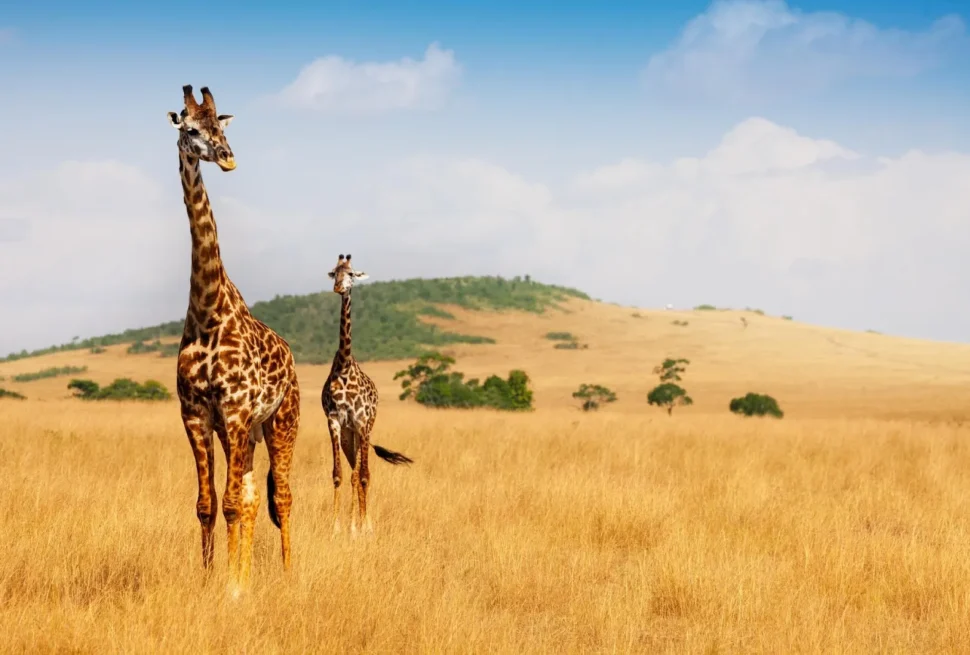
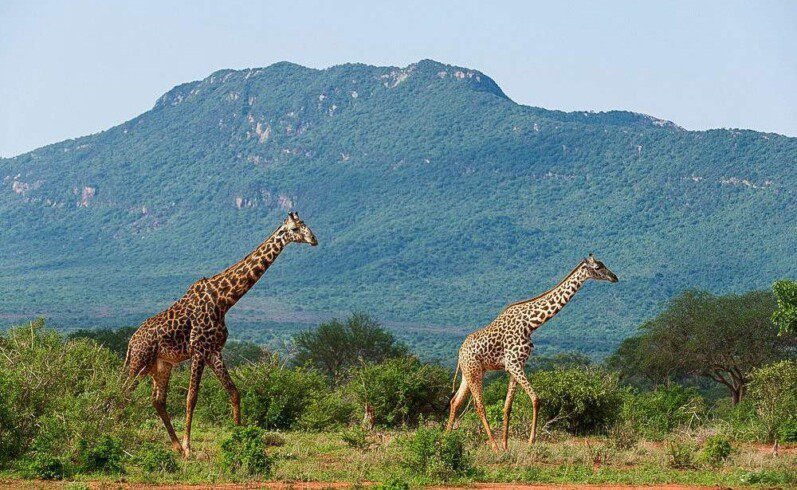
Picture this: you’re sitting in an open Land Cruiser, engine off, somewhere so quiet you can hear your own heartbeat. A bull elephant the colour of terracotta earth walks within thirty metres of you — unhurried, unbothered, absolutely enormous. The red dust he kicks up catches the late afternoon light like smoke. Nobody in your vehicle says a word.
That moment? It happened in Tsavo East National Park. But here’s the thing — a very different and equally extraordinary version of that moment is waiting for you in Tsavo West, too. When travellers ask about Tsavo National Park East vs West, which is better, what they’re really asking is: which one is right for me? And that’s a question worth answering properly.
Together, Tsavo East and Tsavo West form one of the largest protected wilderness areas on Earth — over 20,000 square kilometres of savannah, riverine forest, volcanic rock and semi-arid thornbush. They share a boundary and a name, but they are genuinely different experiences. One feels vast and raw. The other feels layered and dramatic. Both are magnificent.
Let’s break it down honestly.
The Lay of the Land: Two Parks, Two Personalities
Tsavo East is the larger of the two — roughly twice the size of Tsavo West — and it wears that scale proudly. The landscape here is semi-arid and open, dominated by flat red plains, scattered doum palms, and the famous Galana River cutting a green slash through the ochre. There are no hills to break up the horizon. The sky feels enormous. It can feel almost harsh in the dry season, which is precisely why the wildlife concentrates so dramatically around water sources.
Tsavo West, by contrast, is a park of contrasts and surprises. Here the land is more varied — volcanic hills, dense acacia woodland, the glittering springs of Mzima, and the eerie black expanse of the Shetani lava flow, which erupted less than 500 years ago and still looks fresh from the underworld. The terrain is hillier, the vegetation thicker, the atmosphere somehow more intimate. If Tsavo East is a wide-open stage, Tsavo West is a theatre with hidden rooms.
What most visitors don’t realise is that these two parks, side by side, offer the kind of ecological diversity you’d normally need two separate safari destinations to find.
Wildlife: What You’re Actually Likely to See
Both parks carry the Big Five, but the experience of finding them differs significantly — and that’s worth knowing before you book.
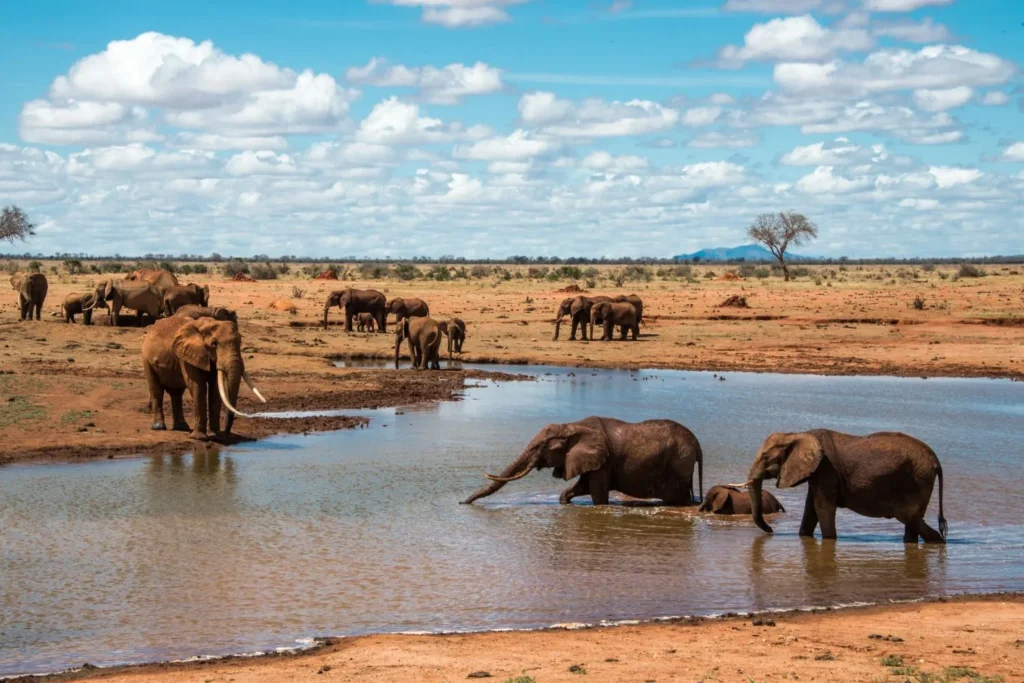
Tsavo East is where you come for elephants. Full stop. The park holds one of Kenya’s largest elephant populations, and these are the famous red elephants — animals that have developed the habit of dust-bathing in the iron-rich red laterite soil until their grey skin turns a warm russet. Watching a hundred of them move across the open plains toward the Galana River at dusk is one of those experiences that rewires something in your brain permanently.
The open terrain in East also makes for excellent lion and cheetah sightings — predators are easier to spot when the grass isn’t chest-high. Buffalo roam in enormous herds. The birdlife is spectacular, with over 500 recorded species including the striking Basra reed warbler and golden pipit.
Tsavo West is your best bet for black rhino sightings in the Ngulia Rhino Sanctuary — a fenced reserve within the park where a small but growing population is carefully protected. This is one of the few places in Kenya where you have a realistic chance of seeing rhino without going all the way to Ol Pejeta. The park also has strong leopard density, partly because of the thicker vegetation. Lions are present but harder to find. The varied habitat also supports different species entirely — look out for lesser kudu, gerenuk, and the stunning fringe-eared oryx.
Honest truth: if your absolute priority is concentrated, visible wildlife on your first Kenya safari, Tsavo East edges ahead. If you want diversity of species and landscape — and that rhino sighting — Tsavo West earns its place
The Magic You Won’t Find Anywhere Else
Every great safari destination has its signature moment — the one thing that makes it irreplaceable. Tsavo has two, one in each park.
In Tsavo East, it’s Lugard’s Falls. The Galana River here narrows into a series of dramatic rapids and carved rock channels, the water turning from brown to white to green as it forces its way through ancient formations. Crocodiles haul themselves onto the banks nearby. It’s a scene that feels prehistoric, and it costs nothing extra — you just drive there.
In Tsavo West, it’s Mzima Springs. Underground lava filters hundreds of millions of litres of water per day up through the volcanic rock, producing two crystal-clear pools teeming with hippos and crocodiles. There is an underwater viewing chamber built into the bank — genuinely one of the strangest and most wonderful things in any national park in Africa. You stand below the waterline and watch hippos drifting past like slow, pink submarines. Nothing prepares you for it.
These aren’t just sights. They’re the moments you’ll be telling people about for years.
When to Visit Each Park
Tsavo’s seasons follow Kenya’s broader safari calendar, but the two parks respond to them slightly differently.
The dry seasons — roughly January to March and July to October — are the best time for wildlife viewing in both parks. In Tsavo East, the dry season is transformative: vegetation thins out, the red dust thickens, and animals funnel toward the Galana and Voi Rivers in extraordinary numbers. This is peak elephant time. In Tsavo West, the dry season also concentrates wildlife around Mzima Springs and the Kimani River.
The long rains (April–June) make the parks lush and genuinely beautiful, but the tracks become difficult and wildlife disperses. Tsavo West, with its hillier terrain, can become especially challenging to navigate after heavy rain. This isn’t necessarily a reason to avoid it — off-peak Tsavo can be hauntingly peaceful — but go in with realistic expectations and the right vehicle.
November brings short rains, which are usually light enough that game viewing continues well. The parks green up fast, and the birding becomes extraordinary as migrants arrive.
If you can only visit once, aim for July through October. You’ll catch both parks in their most dramatic, wildlife-rich state.
Getting There and Getting Around
Both parks are accessible by road from Nairobi — roughly four to five hours drive — and both sit alongside the Nairobi-Mombasa highway, which makes combining them with a coastal extension genuinely easy.
Tsavo East is entered via Voi Gate (if coming from Nairobi) or Bachuma Gate (if coming from the coast). The terrain is flatter and most tracks are manageable in a standard 4WD, though some areas require experience. The Galana corridor offers the most reliable wildlife viewing.
Tsavo West is entered via Mtito Andei Gate or Tsavo Gate. The varied terrain means you’ll want an experienced driver-guide who knows where the roads get tricky — this isn’t a park where you want to go alone with a Google Maps screenshot and good intentions.
Flying in is possible for both parks, with small airstrips serviced by Airkenya and Safarilink. If you’re combining Tsavo with Amboseli or the Maasai Mara, a fly-in safari saves enormous time and is worth budgeting for.
The honest logistical truth: doing both parks on the same trip is entirely achievable and wildly worthwhile. Many operators, including us, design three-to-five day itineraries that loop through both. You don’t have to choose.
So — Tsavo East vs West: Which Is Better for You?
Here’s the direct answer, because you deserve one.
Choose Tsavo East if you want vast, open wilderness, the best elephant encounters in Kenya, and a classic semi-arid savannah experience with strong year-round wildlife visibility. It’s also the better choice for first-time safari-goers who want reliable, dramatic sightings without too many logistical complications.
Choose Tsavo West if you’re drawn to landscape variety, want a genuine shot at black rhino, love the idea of volcanic scenery and Mzima Springs, and perhaps have a safari or two already under your belt. It rewards the curious traveller who wants to go a little deeper.
Choose both if you have three or more days and want what Tsavo actually is: one of Africa’s great, underrated wilderness experiences, experienced in full. Tsavo East and West together form a complete picture that neither park tells alone — and frankly, combining them is what most guests who visit once and come back always say they wish they’d done the first time.
As a park system, Tsavo is less crowded than the Maasai Mara, more varied than Amboseli, and more accessible than many people expect. It’s a place that reveals itself slowly — and rewards you enormously for paying attention.
Ready to see it for yourself? Our team at Rustic Nature Tours designs Tsavo itineraries that cover both parks properly — with experienced local guides, hand-picked camps, and the kind of unhurried pacing that lets these places actually get under your skin. Get in touch and let’s start planning your trip.
Frequently Asked Questions
Can I visit both Tsavo East and West on the same safari?
Absolutely — and we’d strongly recommend it. The two parks share a boundary and can be combined smoothly in a three-to-five day itinerary. Many travellers enter through one park and exit through the other, which works especially well if you’re travelling between Nairobi and the Kenyan coast. Doing both gives you the full breadth of what Tsavo offers and is genuinely one of the best-value multi-day safaris in Kenya.
Which park is better for seeing the Big Five?
Both parks contain the Big Five, but with different strengths. Tsavo East is exceptional for elephants, lions, leopard, and buffalo. Tsavo West gives you the best realistic chance of black rhino sightings through the Ngulia Rhino Sanctuary. If seeing all five on one trip is a priority, combining both parks — or pairing Tsavo West with Ol Pejeta — is your most reliable strategy.
Is Tsavo safe to visit?
Yes. Both Tsavo East and West are well-managed national parks under Kenya Wildlife Service. Travelling with a reputable operator and an experienced guide is the standard practice across all Kenyan parks — not because of any particular danger, but because it simply makes the safari far richer and more rewarding. The parks are remote in parts, so self-drives are not recommended unless you have significant prior experience navigating East African bush tracks.
How does Tsavo compare to the Maasai Mara?
They’re genuinely different experiences. The Mara is famous for its lion density, the Great Migration (July–October), and concentrated wildlife viewing. Tsavo is larger, less crowded, more varied in landscape, and arguably more raw and wilderness-like. Tsavo also tends to be more affordable. Many visitors who have done the Mara find Tsavo a revelation — quieter, less trafficked, and deeply beautiful in a different way. They’re not competing; they complement each other beautifully on a longer Kenya itinerary.
What is the best time of year to visit Tsavo?
July through October is the most reliably excellent period for wildlife viewing in both parks. January through March is also excellent — hot and dry, with dramatic elephant gatherings around water. April through June (long rains) can be beautiful but logistically challenging. The short rains of November are generally manageable and the birding is outstanding. Tsavo rewards year-round visits, but the dry seasons deliver the most concentrated, photogenic wildlife experiences.
Are there luxury camps in Tsavo?
Yes, and the quality has improved significantly in recent years. Tsavo East has several excellent camps along the Galana River corridor, including some genuinely world-class properties with private game drives and beautiful open-air designs. Tsavo West has strong options near Mzima Springs and the Chyulu Hills border. The overall accommodation scene is more spread out and intimate than the Mara — you rarely feel like you’re sharing the bush with dozens of other camps.