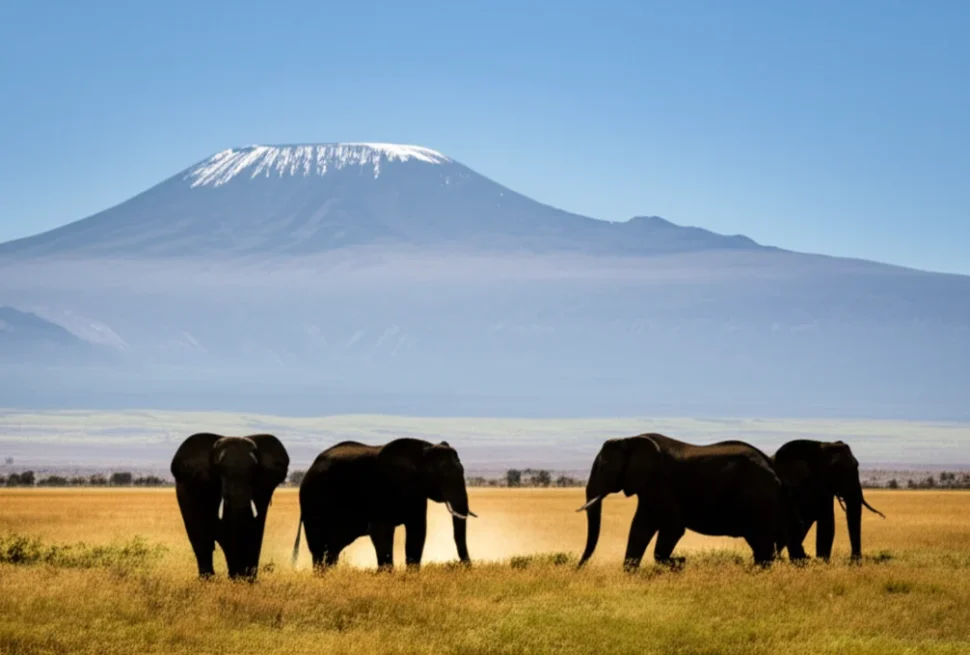
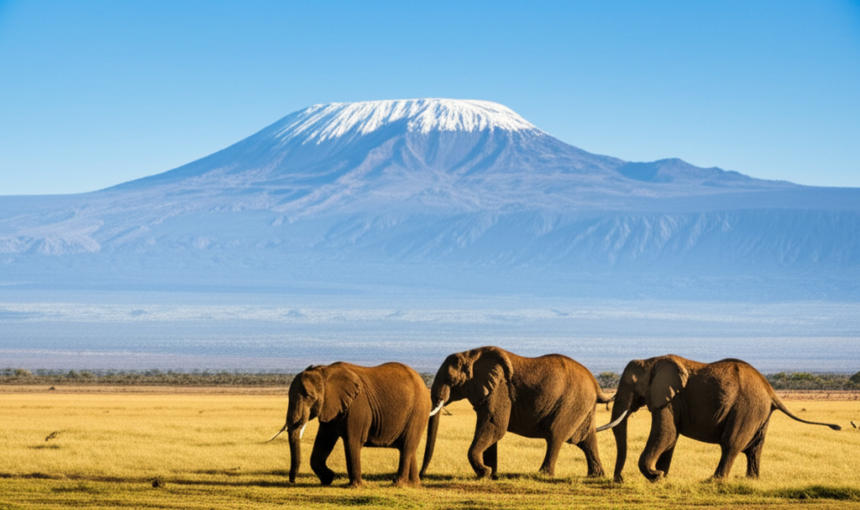
Picture this: you’re sitting in an open Land Cruiser just after dawn. The air is cold enough to warrant a fleece, and the light is that particular shade of amber that photographers chase for months. Forty metres away, a bull elephant — easily four metres at the shoulder — moves silently through the yellow grass. Behind him, so vast it seems unreal, Kilimanjaro rises out of the clouds like a painting someone forgot to finish. You’re not breathing. Nobody in the vehicle is.
That moment happens in Amboseli. A completely different kind of magic — the thunder of wildebeest hooves, a leopard draped over an acacia branch, the Mara River boiling with crocodiles — belongs to the Masai Mara. Both are genuinely world-class safari destinations. Both are in Kenya. And yet they offer experiences so different from each other that choosing between them matters enormously.
This is the honest guide to Amboseli vs Masai Mara — written by people who have spent serious time in both places and want to help you make the right call for your trip.
The Landscapes: Kilimanjaro Drama vs Rolling Savannah
Amboseli is, first and foremost, a place of scale. The park sits at the foot of Mount Kilimanjaro, which at 5,895 metres is the highest freestanding mountain on Earth. On a clear morning — and mornings are often gloriously clear here — the mountain fills your entire field of vision. Swamps fed by glacial meltwater cut through the dusty plains, drawing wildlife in extraordinary concentrations. The red-orange dust, the pale yellow grass, the dark silhouettes of elephants against that white summit: it’s the Africa of your imagination made real.
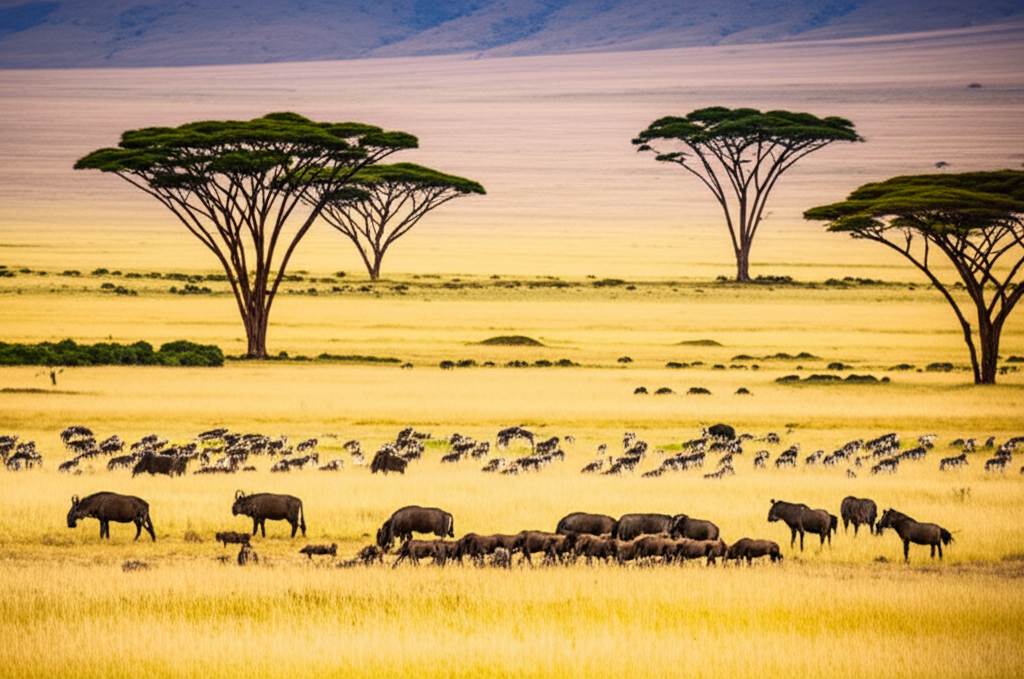
The Masai Mara is something else entirely. Rolling hills, open grasslands that seem to go on forever, riverine forests threading along the Mara River — it’s lush in a way Amboseli isn’t. The famous Mara triangle and the wider ecosystem stretch across into Tanzania’s Serengeti, and that connectivity is exactly why the wildlife here is so abundant and diverse. There’s a wildness to the Mara that feels almost overwhelming. The sky is enormous. The grass is tall. And when a lion roars at dusk across that open savannah, the sound travels for miles.
The honest truth is that neither landscape is objectively better. They’re just profoundly different. If iconic African backdrops and dramatic photography are your priority, Amboseli’s Kilimanjaro views are almost impossible to beat. If you want sheer ecological richness and the feeling of being deep inside wild Africa, the Mara delivers that in spades.
Wildlife: Giants of Amboseli vs the Big Five Abundance of the Mara
Here’s where the two parks diverge most sharply — and where most visitors get their priorities wrong.
Amboseli is elephant country. Full stop. The park is home to some of the most studied, most relaxed elephant populations in Africa. These animals have grown up around researchers and responsible tourism, which means they go about their lives with a magnificent indifference to your Land Cruiser. You will see bulls, matriarchs, calves, and entire extended family groups crossing the plains, bathing in the swamps, dust-bathing in the afternoon heat. What most visitors don’t realise is just how close the encounters are. Five metres. Sometimes less. It’s visceral in a way no zoo or wildlife documentary prepares you for.
Beyond elephants, Amboseli delivers reliable sightings of buffalo, zebra, wildebeest, giraffe, and lion — though predator density here is lower than the Mara. Cheetahs are spotted regularly on the open plains, and the birdlife around the swamps is exceptional: pelicans, storks, herons, and crowned cranes in numbers that will delight anyone with even a passing interest in birds.
The Masai Mara is simply one of the greatest wildlife destinations on the planet. The Big Five — lion, leopard, elephant, buffalo, rhino — are all present. Lions here are abundant and remarkably visible; the Mara’s short grass makes spotting them relatively easy even for first-time safari-goers. Leopards are regularly seen, particularly in the trees along the river. Cheetahs hunt on the open plains. Hyenas, wild dogs, jackals — the predator diversity is staggering.
And then there’s the Great Migration. Between July and October, over a million wildebeest and hundreds of thousands of zebra pour northward from the Serengeti into the Mara ecosystem. The river crossings — where the herds plunge into crocodile-filled water in scenes of pure chaos — are among the most spectacular wildlife events on Earth. If you can time your visit to coincide with peak migration season, the Masai Mara becomes truly unmissable.
 .
.When to Go: Timing Your Visit to Each Park
Timing matters more than most people realise, and getting it wrong can significantly affect what you experience.
Amboseli is best visited during the dry seasons: January to February and June to October. During the dry months, wildlife congregates around the permanent swamps, making game viewing more concentrated and predictable. The long rains (March to May) can make roads muddy and difficult, though the park turns dramatically green and Kilimanjaro is often draped in cloud. The shoulder months — November and December — can be surprisingly rewarding, with fewer visitors and good sightings if the short rains have been light.
A note on the mountain: Kilimanjaro is notoriously shy. Cloud cover can obscure it completely for days at a time, especially during the rainy season. Your best chance of crystal-clear views is early morning during the dry season — which means being out of camp before sunrise. Worth every second of lost sleep.
Masai Mara is excellent year-round, but peak season runs from July through October when the Migration is in full swing. This is also peak tourist season, so expect busier camps and higher prices. The so-called green season (November to June) is genuinely underrated: the landscape is lush, calving season brings dramatic predator-prey interactions, and you’ll share the experience with far fewer visitors. Some of the most extraordinary lion sightings happen outside Migration season.
If you’re planning a combined trip — and many of our guests do exactly this — a typical itinerary might spend three nights in Amboseli followed by four nights in the Mara. The contrast between the two parks makes each feel richer by comparison.
The Experience: Camp Atmosphere, Crowds and Getting Off the Beaten Track
Amboseli has fewer camps and lodges than the Mara, which means a quieter, more intimate atmosphere. Out on the plains, it’s common to have an entire sighting to yourself — just you, your guide, and a herd of forty elephants going about their morning. The park isn’t large (392 square kilometres), which makes it manageable and easy to navigate. There are no internal flights required, and the drive from Nairobi takes around four hours on a good day. For visitors who want a first safari that feels accessible without sacrificing quality, Amboseli is hard to fault.
The Masai Mara is significantly larger and more visited. During peak Migration season, popular river crossing points can attract multiple vehicles, and the experience loses some of its wildness if you’re not careful about where you stay and how you structure your game drives. The solution is simple: choose a camp in the less-visited conservancies surrounding the main reserve — Naboisho, Olare Motorogi, or the Mara Triangle — where vehicle numbers are strictly controlled and the experience is transformative. Here’s the thing: a private conservancy camp in the Mara ecosystem during Migration season might be the finest safari experience in Africa. Full stop.
Both parks have a strong Maasai cultural presence, and responsible visits to local communities add genuine depth to the experience. Understanding something of the people who have lived alongside this wildlife for centuries changes how you see everything else.
Amboseli vs Masai Mara: An Honest Recommendation
If you only have time for one park and you’ve never been on safari before, the Masai Mara edges it — purely for sheer variety of wildlife, the Big Five, and the chance of catching some portion of the Migration. It’s the safari that ticks every box most people arrive with.
But if you’re a returning visitor, a photographer, someone who dreams of elephants against Kilimanjaro, or simply a traveller who prefers depth over breadth — Amboseli might move you more profoundly than anywhere else in Africa. The elephant encounters here are genuinely once-in-a-lifetime.
For guests with the time and budget, combining both parks in a single trip is the perfect answer to the Amboseli vs Masai Mara debate. You get the intimate giants-and-mountain magic of Amboseli followed by the wide-open predator richness of the Mara. The two parks complement each other beautifully, and the contrast between them makes both feel more vivid.
Whatever you decide, we’re here to help you plan it properly. At Rustic Nature Tours, our guides know both parks intimately — where the best elephant families roam at first light, which Mara conservancy has the most relaxed leopards, and how to time your drives to avoid the crowds and find the moments that stay with you forever. Reach out and let’s start planning your Kenya safari together.
Frequently Asked Questions
Is Amboseli or Masai Mara better for first-time safari visitors?
Both are excellent choices for first-timers, but the Masai Mara typically edges ahead for its sheer volume and diversity of wildlife, including reliable Big Five sightings. That said, Amboseli’s close elephant encounters and the drama of Kilimanjaro make it equally unforgettable — and it’s generally less crowded. If budget and time allow, combining both parks gives you the best of Kenya’s safari landscape.
Can I visit both Amboseli and Masai Mara on the same trip?
Absolutely — and many of our guests do exactly this. A popular itinerary is three nights in Amboseli followed by four nights in the Masai Mara. You can fly between the parks (roughly 45 minutes) or combine a road transfer and domestic flight. The two parks complement each other perfectly, offering contrasting landscapes, wildlife and atmosphere in a single trip.
Which park is better for seeing the Great Migration?
The Great Migration passes through the Masai Mara ecosystem, typically between July and October. This is when the wildebeest river crossings happen and wildlife density in the Mara is at its annual peak. Amboseli does not feature the Migration route. If witnessing the river crossings is a priority, plan your Mara visit between late July and early October.
Is Amboseli worth visiting without seeing Kilimanjaro?
Yes — though the mountain is a huge part of Amboseli’s appeal, the elephant experiences alone justify the trip. The park’s close-up encounters with large, relaxed elephant herds are among the finest in Africa regardless of cloud cover. That said, your best chance of clear Kilimanjaro views is early morning during the dry season (June to October), so timing your visit accordingly is worthwhile.
How do the costs compare between Amboseli and Masai Mara?
Generally speaking, the Masai Mara — particularly the private conservancies surrounding the main reserve — commands higher accommodation prices than Amboseli, especially during peak Migration season (July to October). Amboseli offers excellent value without sacrificing quality. Both parks have options across a range of budgets, from tented camps to luxury lodges, and our team can help match you to the right property for your needs and budget.