If you’ve ever dreamed of doing something truly meaningful with your love of wildlife, the chance to adopt an elephant in Kenya might just be the most powerful thing you ever do. Not a stuffed toy. Not a symbolic gesture buried in small print. A real, breathing, mud-splattered, mischievous baby elephant — one that was orphaned in the wild, rescued from the brink, and is now fighting its way back to freedom with the help of people just like you. Kenya is home to one of the world’s most celebrated elephant conservation programmes, and whether you’re planning a safari or simply want to connect with Africa’s wildlife from the other side of the world, adopting an elephant opens a door to something extraordinary.
Why Adopt an Elephant? The Crisis Behind the Cause
Africa’s elephant population has faced catastrophic pressure over the past century. Poaching, habitat loss, human-wildlife conflict and prolonged drought have left thousands of calves orphaned — too young to survive without their mothers, too vulnerable to fend for themselves. In Kenya alone, elephant numbers plummeted from around 167,000 in the 1970s to fewer than 16,000 by the late 1980s. Conservation efforts have helped stabilise populations since then, but the threats have never gone away.
When a baby elephant loses its mother, the outcome without intervention is almost always fatal. Elephants are deeply social, emotionally complex animals. They grieve. They mourn. They need touch, companionship and guidance just as human children do. A calf under two years old cannot digest grass and depends entirely on milk — and without its mother, it will simply waste away.
This is why the decision to adopt an elephant carries such genuine weight. Your support directly funds the round-the-clock care that gives these calves a fighting chance — the specialist milk formula, the dedicated keepers who sleep alongside them, the medical treatment, and ultimately, the slow, careful process of reintegrating them into wild herds. It is conservation at its most intimate, and its most urgent.
How to Adopt an Elephant Through the David Sheldrick Wildlife Trust
The most established and respected elephant adoption programme in Kenya — and arguably the world — is run by the David Sheldrick Wildlife Trust (DSWT), based at the Nairobi National Park. Founded by Dame Daphne Sheldrick, who spent decades perfecting the formula and techniques needed to hand-rear orphaned elephants, the trust has successfully rehabilitated and released over 260 elephants back into the wild since it began. That number is extraordinary. It represents generations of elephants, herds rebuilt, lives restored.
Adopting through the DSWT is beautifully straightforward:
- Choose your elephant — Browse the trust’s roster of orphans, each with a name, a backstory, and a personality that leaps off the page. There’s Kindani, rescued after her herd was frightened by a helicopter. There’s little Mukkoka, found alone and dehydrated near a dry riverbed. Every elephant has a story.
- Select your adoption level — Individual and group fostering options are available, with annual fees that go directly to the care programme.
- Receive your adoption package — You’ll get a personalised certificate, a profile of your elephant, and regular updates on their progress. Some levels include a soft toy replica of your adopted calf.
- Stay connected — Monthly keeper diaries and annual stocktaking reports keep you updated as your elephant grows, socialises with the herd, and eventually takes their first steps back into the wild.
You can adopt entirely online from anywhere in the world, making it a perfect gift for wildlife lovers, children, or anyone who wants their money to mean something real.
Visiting the Orphanage: Where Adoption Comes to Life
There is a profound difference between adopting an elephant from a computer screen and standing in a dusty enclosure as a trunk nudges your hand and a pair of amber eyes blink curiously up at you. If you are planning a Kenya safari, visiting the David Sheldrick Elephant Orphanage in Nairobi is an experience that will permanently rearrange your priorities — in the best possible way.
Every morning, the orphan elephants are brought out for a public visiting hour between 11am and noon. You’ll watch them charge into the red mud wallow with gleeful abandon, jostle for bottles of milk, and lean into their keepers with an almost unbearable tenderness. These animals know they are loved. You can see it in every interaction.
For foster parents — those who have chosen to adopt an elephant — there is an exclusive behind-the-scenes experience available from 5pm to 6pm, where you can meet your specific elephant up close. It is one of the most coveted wildlife encounters in East Africa, and for good reason.
Rustic Nature Tours offers a carefully curated visit to the orphanage as part of a Nairobi day experience. Our guide to visiting the David Sheldrick Elephant Orphanage covers everything you need to know — timings, what to expect, how to dress, and how to make the most of every minute. We also run a dedicated tour to the David Sheldrick Elephant Orphanage that pairs the orphanage visit with other meaningful Nairobi experiences.
What Your Adoption Fee Actually Pays For
It’s worth understanding exactly where your money goes — because the detail is both humbling and inspiring. Raising an orphaned elephant calf to the point where it can safely rejoin a wild herd is a multi-year, enormously resource-intensive undertaking. The DSWT’s keepers work in shifts around the clock, sleeping in the stables alongside the youngest calves to provide the warmth and emotional security the animals desperately need.
Your adoption contributes to:
- Specialist milk formula — The formula Daphne Sheldrick spent years developing, without which infant elephants cannot survive
- Veterinary care — Treatment for injuries, infections, malnutrition and trauma
- Keeper salaries and training — The dedicated humans who become surrogate family to each orphan
- Reintegration support — The gradual, carefully managed process of introducing older orphans to wild herds in Tsavo
- Anti-poaching operations — The trust operates mobile veterinary units and works closely with Kenya Wildlife Service to protect wild elephants
- Community outreach — Educating local communities to coexist peacefully with wildlife
This is not charity for its own sake. It is a sophisticated, science-led conservation model that has proven results. When you adopt an elephant, you become part of that model.
Adopt an Elephant as a Gift: Ideas That Actually Matter
If you’re searching for a gift that cuts through the noise — something that will genuinely move the person receiving it — an elephant adoption is difficult to beat. The DSWT offers gift adoptions that can be set up in minutes online, with a beautiful package sent directly to the recipient or delivered digitally.
Consider it for:
- Children who love animals and are beginning to understand conservation
- Birthdays and anniversaries for wildlife-loving partners or friends
- Corporate gifting — a meaningful alternative to the standard hamper
- Wedding gifts — particularly for couples who’ve just been on safari
- Christmas presents with a story worth telling around the table
There is something quietly radical about giving a gift that benefits not just one person, but an entire species. It shifts the conversation. It sparks curiosity. And it plants a seed — because once someone learns about what is happening to elephants in Africa, they rarely look away.
Beyond Adoption: Seeing Elephants in the Wild on Safari
Adopting an elephant is a beautiful act of long-distance love. But nothing — nothing — compares to seeing these animals in their natural habitat. Kenya is one of the finest elephant-watching destinations on earth, with significant populations roaming across Amboseli, Tsavo, Samburu and the Masai Mara ecosystems.
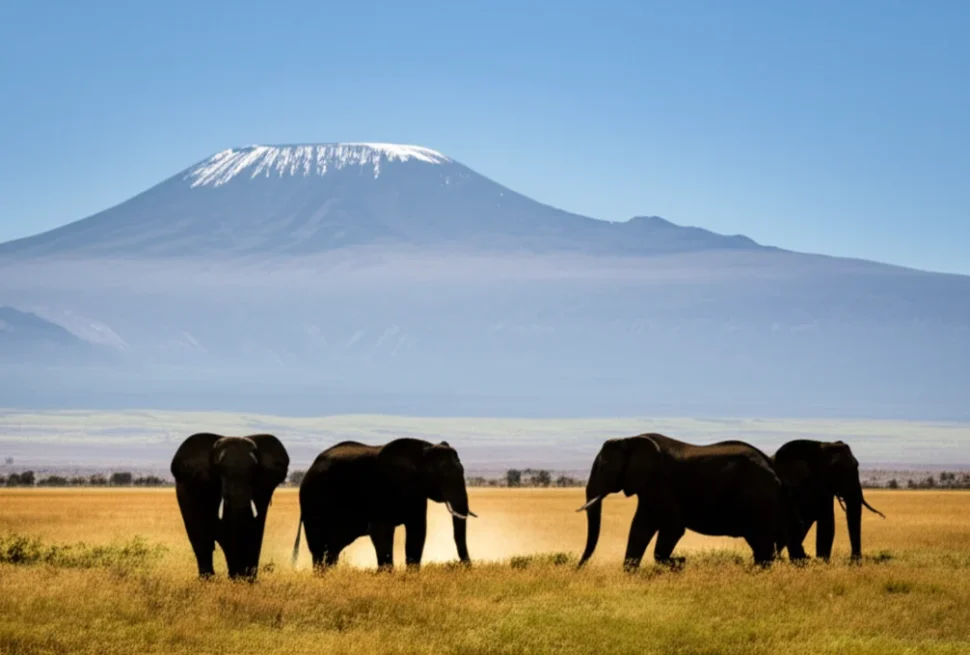
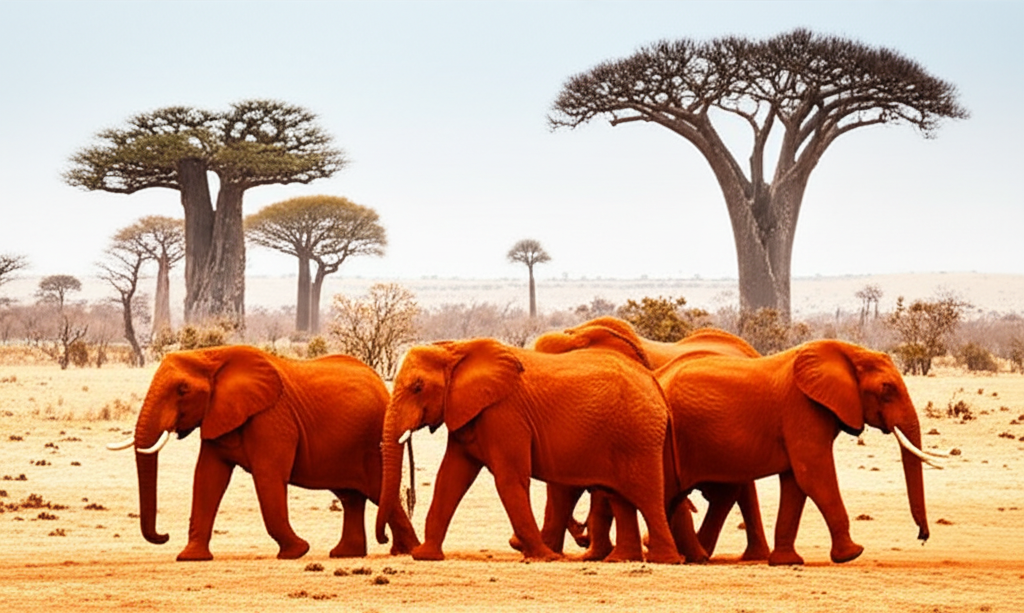
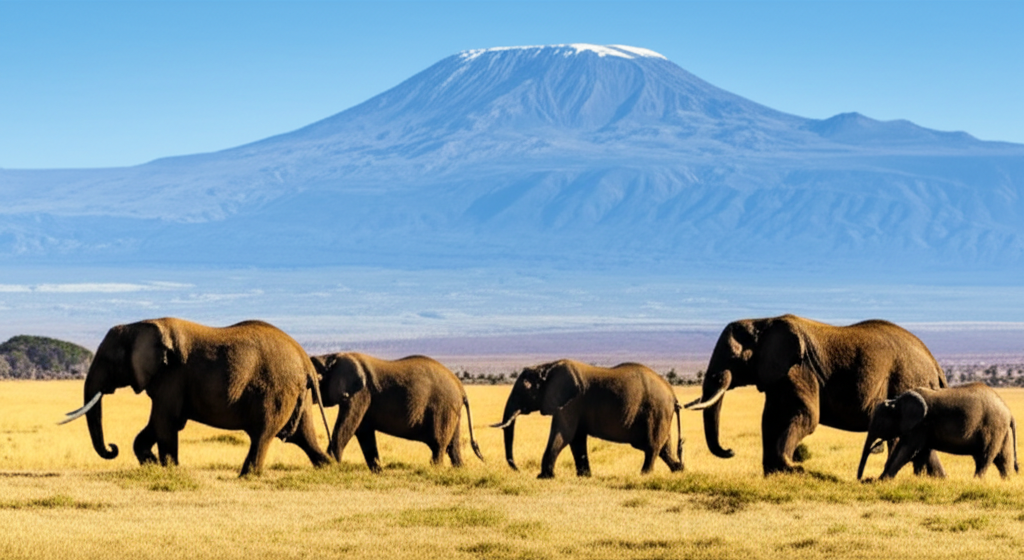
In Amboseli National Park, you’ll encounter some of Africa’s largest-tusked elephants moving in vast family groups against the snow-capped backdrop of Kilimanjaro — one of the continent’s most iconic wildlife scenes. In Tsavo East and West, the landscape turns to red dust and the elephants themselves take on a rust-coloured hue, having rolled in the iconic Tsavo laterite soil. In Samburu, northern specialist species share waterholes with elephants in a wild, remote setting that feels truly frontier.
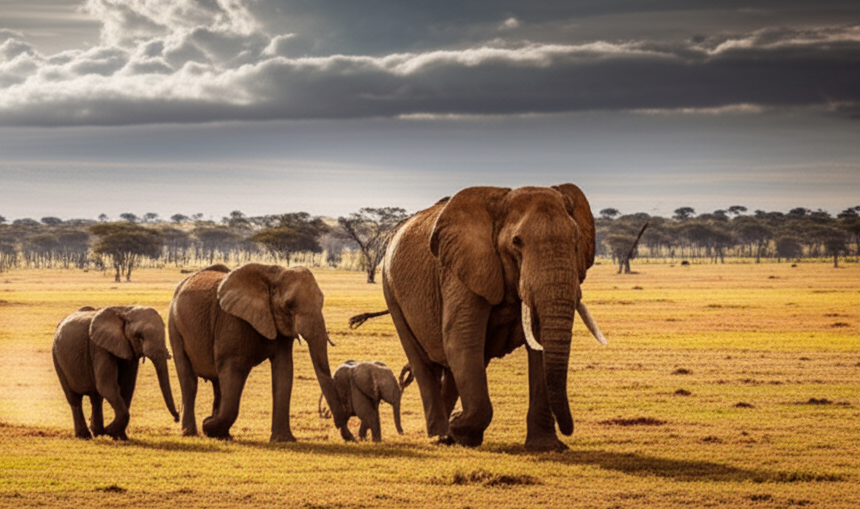
Watching a herd of wild elephants — matriarch leading, calves tucked protectively between adult legs, teenagers play-fighting at the edge of the group — is a reminder of exactly what is at stake, and exactly why the work of organisations like DSWT matters so profoundly. When you’ve adopted one of these animals, that connection feels electric.
At Rustic Nature Tours, we design Kenya safaris around these extraordinary encounters. Our team knows where the elephant families roam at each time of year, which watering holes draw the largest herds, and how to position you for the kind of sightings that stay with you for decades. A safari with us isn’t just a holiday — it’s a relationship with the wild.
Plan Your Kenya Safari: Experience Elephant Conservation Firsthand
You’ve chosen to adopt an elephant. You’ve read the keeper diaries, watched the updates, fallen quietly in love with an animal you’ve never met. Now imagine standing twenty metres away from that same species — free, powerful, and utterly magnificent — in the Kenyan wilderness. That is the journey we help you make.
Rustic Nature Tours specialises in premium, personalised Kenya safaris that weave conservation experiences into the heart of every itinerary. We’ll take you to the David Sheldrick Elephant Orphanage in Nairobi, then out into the parks where your adopted elephant’s kin roam wild and free. Every trip is crafted around your travel style, your interests and your budget — with a 4.9 Google rating built on thousands of guest experiences that exceeded expectations.
Ready to go beyond the screen and into the story? Explore our David Sheldrick Elephant Orphanage tour as your starting point, and speak to our team about building a full Kenya safari around your passion for elephants. The wildlife is waiting. So is your elephant.
Frequently Asked Questions
How much does it cost to adopt an elephant in Kenya?
Through the David Sheldrick Wildlife Trust, elephant adoptions start at around $50 USD per year for a standard individual fostering. The fee covers milk formula, veterinary care, keeper costs and reintegration support. Corporate and group adoption packages are also available at varying price points. All fees go directly to the care of the elephants.
Can I visit my adopted elephant in person?
Yes — and it’s an unforgettable experience. Foster parents at the DSWT are invited to an exclusive 5pm visit at the Nairobi nursery, where you can meet your specific elephant up close outside of public visiting hours. Rustic Nature Tours can incorporate this into your Nairobi itinerary. Our guide to visiting the orphanage has all the practical details you’ll need.
Is adopting an elephant a good gift for a child?
It’s one of the best wildlife gifts you can give a child. Adoption packages include a certificate, an elephant profile with photos, and regular keeper diary updates — making conservation feel personal and exciting. It teaches empathy, global awareness and the real-world impact of individual action. Many families adopt elephants together and follow their elephant’s journey for years.
What happens to adopted elephants when they grow up?
The goal of every adoption is eventual release back into the wild. DSWT orphans are gradually moved to holding facilities in Tsavo National Park, where they begin integrating with wild herds. The process can take many years and is done at each elephant’s own pace. Foster parents receive updates throughout, and many elephants go on to have their own calves in the wild — completing an extraordinary circle.
Do I need to travel to Kenya to adopt an elephant?
Not at all. Elephant adoptions through the DSWT can be set up entirely online from anywhere in the world, and you’ll receive updates digitally. That said, if you do visit Kenya on safari, experiencing the orphanage in person — and seeing wild elephants in the parks — adds an irreplaceable dimension to your connection with these animals. Contact Rustic Nature Tours to start planning your visit.